What Every Owner Should Be Doing Before June 1
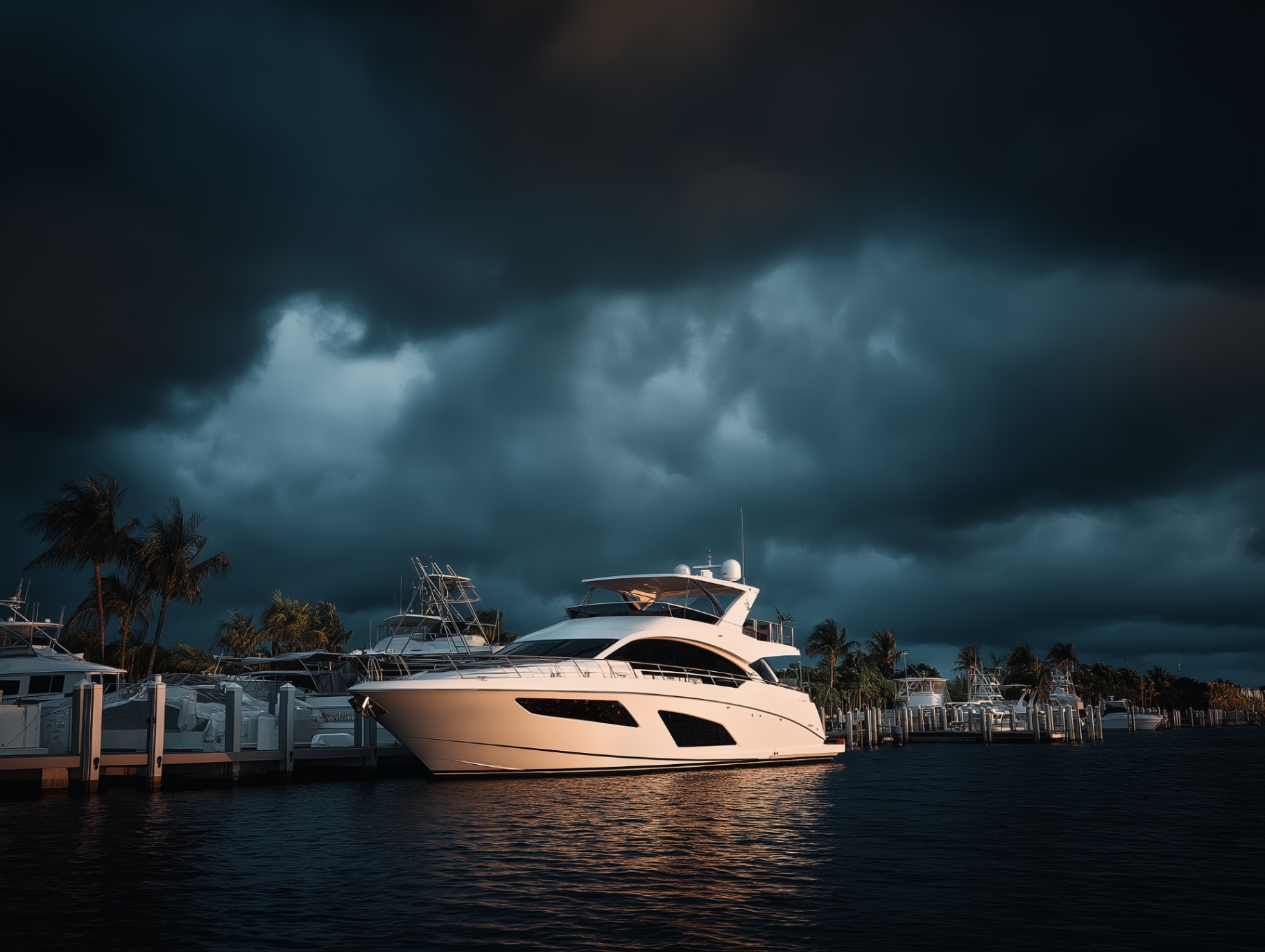
Hurricane season in South Florida runs June 1 through November 30, with peak activity between mid-August and early October. Early forecasts for 2026 point toward a below-average season, but below-average is not inactive. A single well-placed storm is all it takes to cause serious damage to an unprepared vessel. The owners who come through hurricane season with their yachts intact are the ones who planned ahead.
Start Early: Why May Is the Right Time
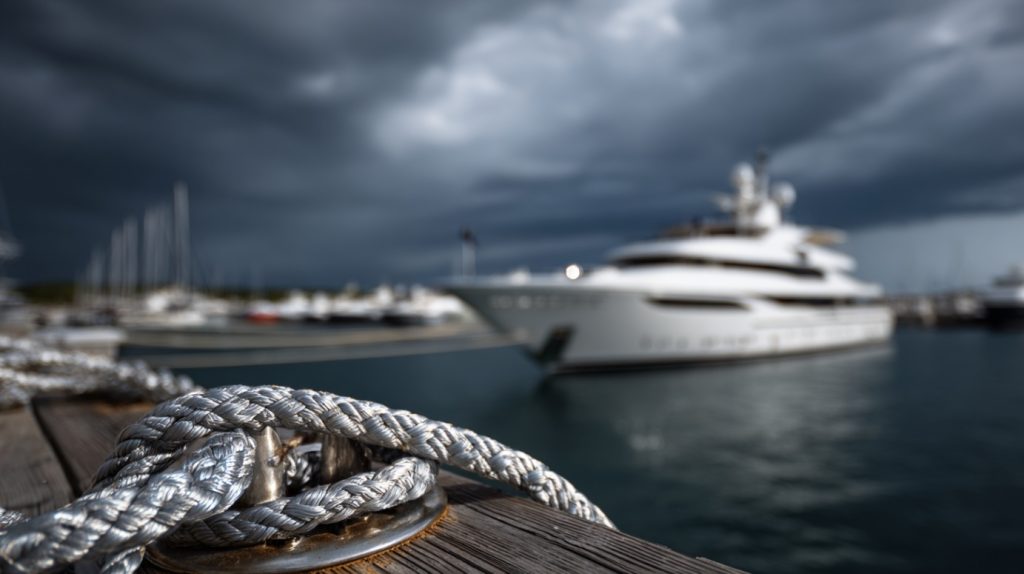
By the time June arrives, haul-out reservations are full and protected slips are gone. Starting your preparation in early May gives you time to schedule inspections, address maintenance issues, and lock in your storage plan before availability disappears.
Storage and Location: Your Most Important Decision
Where your yacht rides out a storm matters more than almost anything else. Your main options include:
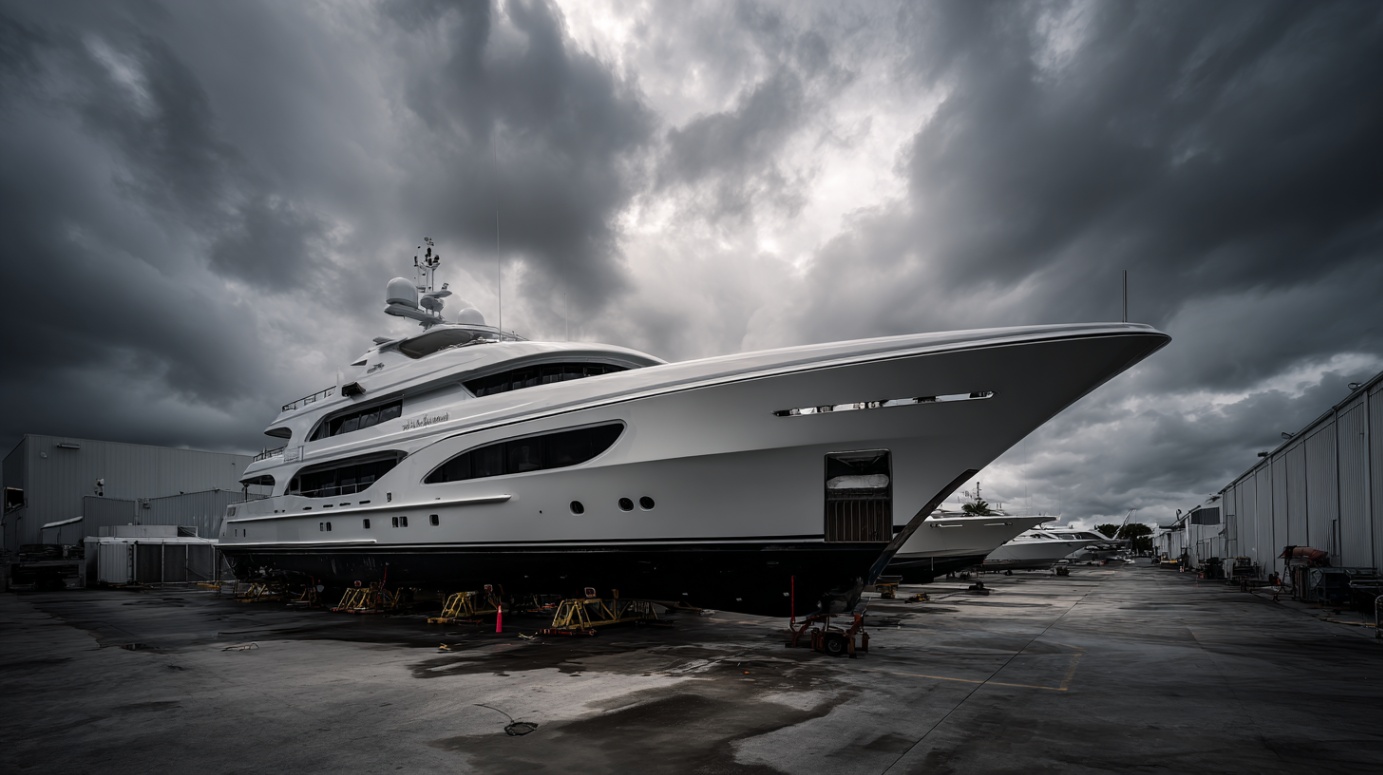
- Haul-out and dry storage: Eliminates surge and wave exposure entirely. Widely considered the safest option, but spaces fill quickly.
- Dry stack storage: Solid protection for small to mid-size vessels in covered facilities.
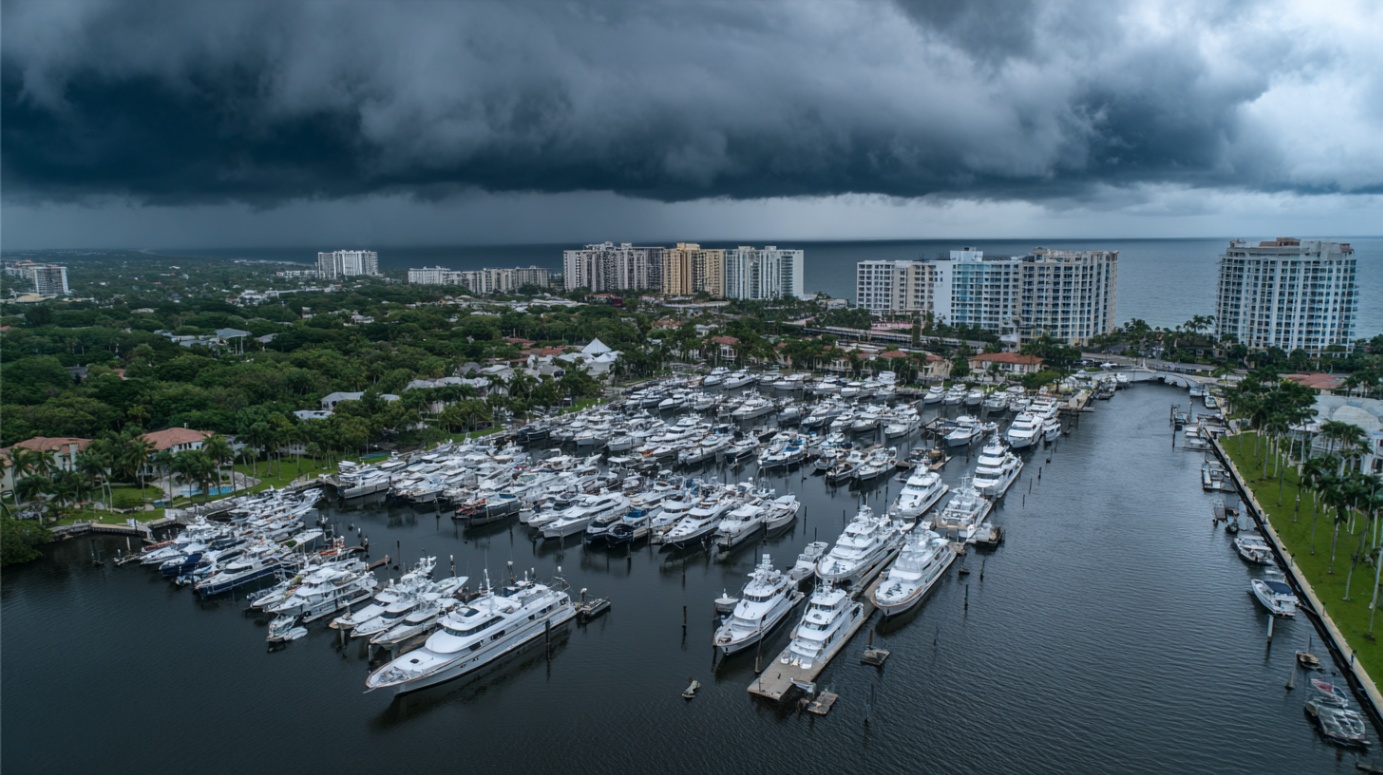
- Hurricane-rated marinas: Inland locations with reinforced infrastructure. Ask about hurricane protocols, piling condition, and dock hardware before committing.
If relocation is part of your plan, confirm fuel levels, engine condition, and crew communication well in advance.
Securing the Vessel
Whether your yacht stays in the water or goes on land, a thorough storm-readiness checklist is essential:
- Remove all canvas, biminis, sail covers, and exterior cushions
- Inspect and replace dock lines and chafing gear, rig extra lines longer than usual
- Stow or remove electronics, loose equipment, and deck gear
- Close and secure all hatches, ports, and through-hulls
- Check bilge pumps, battery banks, and engine systems
- Photograph the yacht inside and out to document her condition
Insurance Compliance and Documentation
Many marine insurance policies require specific actions before and during a storm, including notifying your insurer, relocating the vessel, or maintaining a written hurricane plan. Failing to meet these requirements can result in reduced coverage or a denied claim. Review your policy now, before June 1, and make sure all documentation is in place.
How Easthope Marine Can Help
Hurricane preparation is one of the most time-sensitive aspects of yacht ownership in South Florida. At Easthope Marine, we work with our clients ahead of the season to coordinate every element of their hurricane readiness plan, from scheduling inspections and securing storage to reviewing insurance requirements and managing the vessel through the storm cycle.
Reach out to the Easthope Marine team today to put your 2026 hurricane season plan in place.